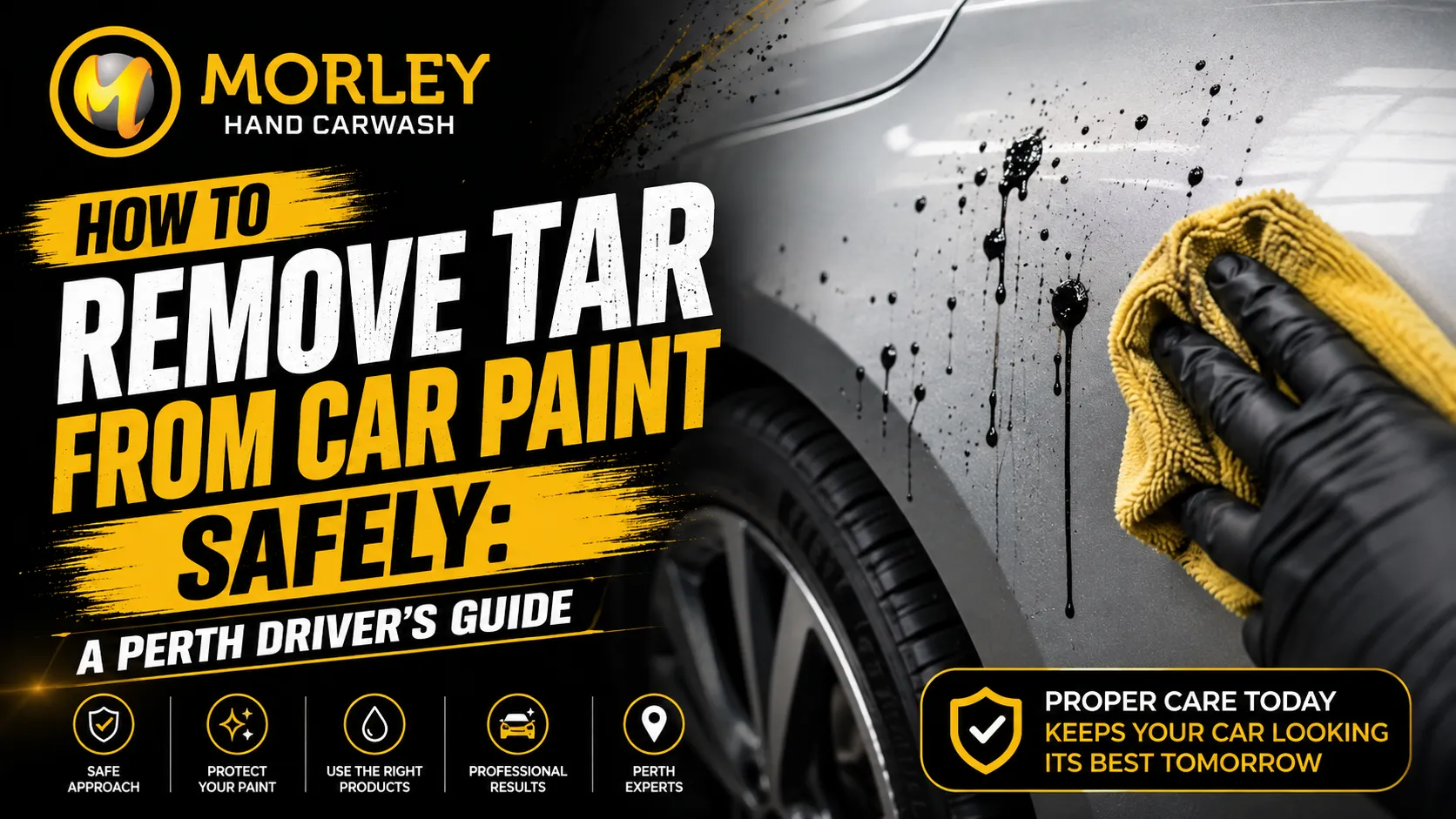
How to Remove Tar from Car Paint Safely: A Perth Driver’s Guide
The vehicle is washed and dried; however, the paint still feels gritty or there are tiny spots which just will not go away. This situation often arises if a vehicle has been traveling through road works, dusty areas or even areas with a lot of traffic. The question then arises as to how one can get rid of the tar on their car’s paint. Scrubbing should be avoided at all costs in this situation.
Tar is not the only substance which can become stuck to the paint of vehicles; others include tree sap, bird droppings and road dirt among others.
What Causes Stubborn Contamination on Car Paint?
Your vehicle’s paint is exposed to more than ordinary dust.
Depending on where you drive and park around Perth, you may encounter:
- Road tar and bitumen
- Tree sap
- Bird droppings
- Insects and insect residue
- Mud and road grime
- Fine dust and industrial contamination
- Salt and other environmental residues
A normal wash can remove loose dirt, but bonded contaminants may require a different approach.
How to Remove Tar from Car Paint Without Damaging It?
The first rule is easy – do not try to scrape it off using an object or a scouring sponge.
Scraping the tar off by using a blade, abrasive cloths or some other tools is very likely to leave some scratches on the clear coat. Also, household cleaning products might be inappropriate for automotive paints and trimmings.
In case of small and recently appeared stains, start with washing the car to get rid of all loose dirt around the spot. It will decrease the possibility of sanding dirt against the paint.
When tar doesn’t come off, use special automotive products made for this purpose and use it according to the instructions provided by manufacturer. In case the product suggests so, test it on a hidden area first before proceeding.
In case of extensive or heavily adhered contamination or mixture of various kinds of surface contamination, professional assistance will be preferable.
What About Tree Sap and Bird Droppings?
Tree sap can be difficult to clean once it has sat for some time, especially during hot weather. The bird droppings also need to be cleaned up before they harden on the surface.
What most car owners do is that they tend to use more pressure to try to clean off the contamination.
What should be done is that the contamination should first be loosened before it is cleaned. It is not advised to scratch at any hard spots using the fingernails.
Once the contamination has been cleaned off but a spot still remains, it is important to realize that the paint underneath might be stained or etched.
Why Does Car Paint Feel Rough After Washing?
While the car may appear clean, touching its surface will make you feel like there’s something rough about it.
This typically means that there are some contaminants still adhering to the paint on the surface.
Here, the need for paint decontamination arises. An experienced detailer will be able to examine the surface and decide whether it needs more cleaning, clay treatment, or polishing.
The current information on paint protection by Morley Hand Car Wash focuses on the clay bar treatment method for eliminating contaminants on the car surface.
When Should You Stop DIY Cleaning?
DIY cleaning is reasonable for routine maintenance and fresh, minor contamination. However, there are situations where continuing to scrub can do more harm than good.
Consider professional assistance if:
- Tar has covered multiple panels.
- Tree sap has hardened and will not release easily.
- Bird-dropping marks remain after cleaning.
- The paint feels rough across large areas.
- You notice staining, dullness or etching.
- You are preparing the vehicle for polishing or paint protection.
- You are unsure whether a mark is contamination or paint damage.
A professional can first identify what is actually sitting on the surface rather than treating every mark as a simple dirt spot.
Cleaning Comes Before Polishing
It is necessary to distinguish between contamination cleanup and paint repair.
In case of paint contamination, it may not necessarily be correct to use machine polishing as an initial solution for the problem. Prior to any machine polishing, the paintwork must be properly cleaned and evaluated.
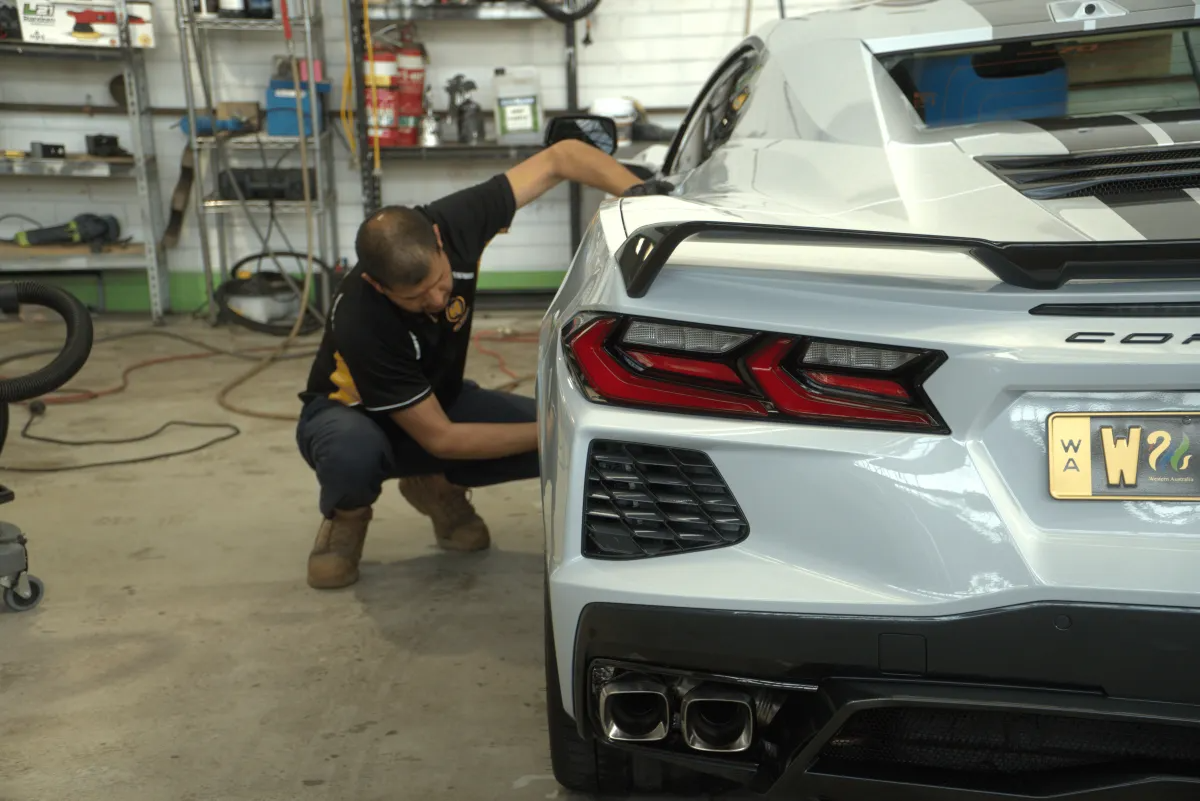
Morley Hand Car Wash provides the services of full detailing, buff polish and cut and polish. Morley’s current information on their services defines full detailing as a thorough cleaning process and buff polish as a process aimed at fixing defects of the vehicle’s exterior.
This becomes especially significant in the case when a vehicle has both bonded contamination and paint defects.
How Perth Drivers Can Reduce Paint Contamination
You cannot prevent every contaminant from reaching your car, but you can reduce the time it remains on the paint.
A few sensible habits include:
- Remove bird droppings as soon as practical.
- Don’t leave tree sap sitting on the paint for extended periods.
- Wash road grime away rather than allowing it to build up.
- Avoid aggressive DIY scrubbing.
- Use automotive-specific products rather than household cleaners.
- Check the paint after washing for rough or sticky areas.
- Consider professional detailing when contamination becomes widespread.
Drivers around Morley, Bayswater, Noranda, Dianella, Beechboro and surrounding Perth suburbs can also consider professional cleaning when ordinary washing no longer restores the surface.
When Professional Detailing Makes Sense ?
In case your vehicle is looking clean but still has rough and sticky paint, then it will be wise to have a proper evaluation done so as to avoid wasting time and money on products that may not work for your surface.
Morley Hand Car Wash offers all services related to paint care, such as buff polish, cut and polish, and paint protection. Their address is 200 Walter Road West, Morley.
The service that you require is determined by the condition of your vehicle. All vehicles do not need polishing when contaminated.
Final Thoughts
How to remove tar from car paint has everything to do with applying the proper procedure to the right kind of contamination.
Contamination that is fresh will be easier to handle through the process of automotive cleaning. Hardened tar, sap from trees, and even rough areas and bird dropping stains might require decontamination by professionals.
Morley Hand Car Wash will be able to check out your paint and let you know whether the paint needs a little more than just washing.
FAQ
How do you remove tar from car paint? Start by washing the vehicle to remove loose dirt. For remaining tar, use an automotive product specifically designed for tar removal and follow its instructions. Avoid scraping or aggressively rubbing the paint.
Can tar damage car paint?
Yes. Leaving tar and other contaminants on vehicle paint for extended periods can make them increasingly difficult to remove and may contribute to surface staining or deterioration.
How do you remove tree sap from a car? Use an automotive-safe method designed to loosen tree sap rather than scraping it from the paint. If the sap has hardened or covers a large area, professional detailing may be more appropriate.
Why does my car paint feel rough after washing? The rough feeling can indicate bonded contaminants that a normal wash has not removed. Professional paint decontamination can be considered when the surface remains gritty or rough after cleaning.
Should I polish my car after removing tar? Not necessarily. First remove and assess the contamination. If the paint underneath has staining, swirl marks or other imperfections, polishing or paint correction may then be considered depending on the condition.
Can Morley Hand Car Wash remove stubborn paint contamination? Morley Hand Car Wash provides full detailing, buff polish and cut and polish services that can be relevant when routine washing is not enough. The appropriate service depends on the vehicle’s condition and the type of contamination present.